Would you like to revisit classics or discover lesser-known masterpieces?
Here is why you should not miss Emir Kusturica’s films.
Are you an unconditional fan of cinema or a curious amateur ? If yes, this is the occasion to talk to you about an outstanding filmmaker who lives…in Normandy ! Nevertheless, he is native of Sarajevo in Bosnia and his works are inspired by his childhood in ex-Yugoslavia, his dreams and themes which are close to his heart. We have prepared a retrospective of his career and a ranking of his three best films (absolutely subjective) to see and review without limits. Follow us!
Youth and first creations
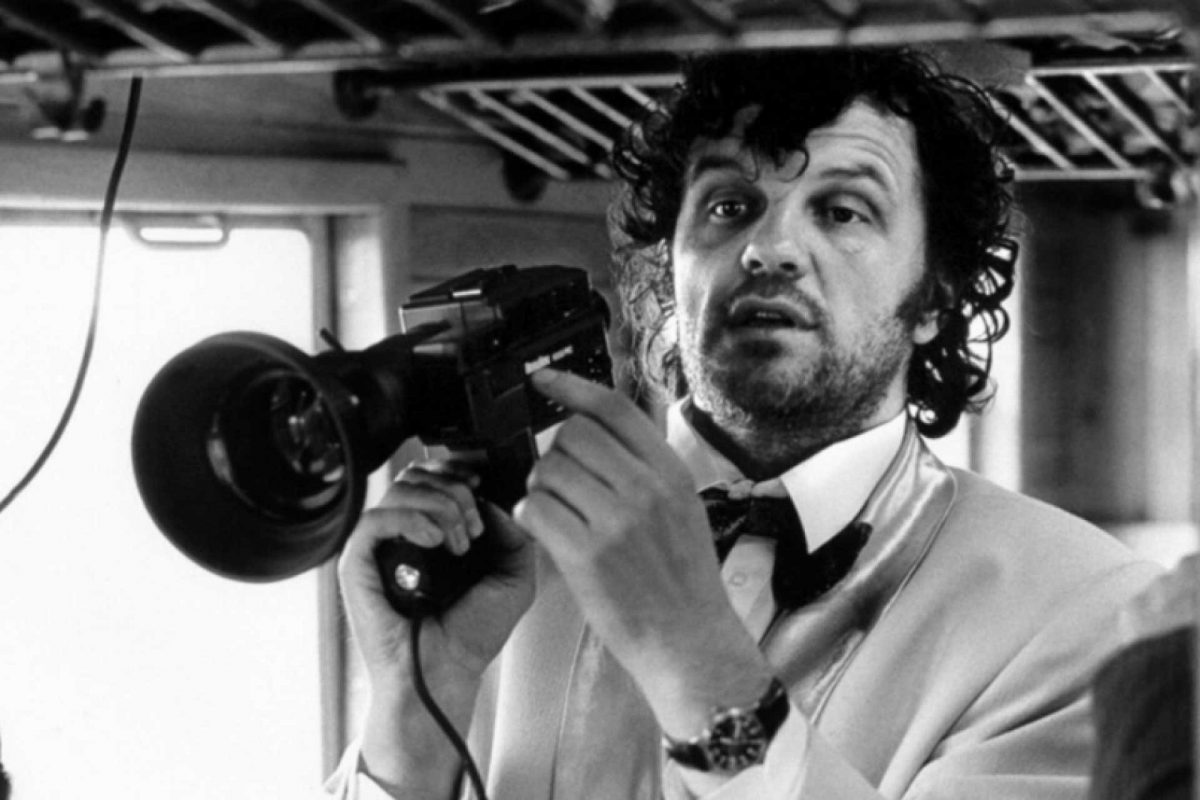
Born in Sarajevo in 1954, the young Emir grew up in the Socialist Federal Republic of Yugoslavia of Marshal Tito.
As a high school student, he has bad company and his parents send him to study in Prague in the famous FAMU (Academy of Performing Arts). He excelled there and was noticed by his teachers. Soon, he directed his first short films and films for television. Sometimes censored for its daring and unconventional content, he won the Yugoslav television prize with an adaptation of a short story by Nobel Prize winner Ivo Andric.
An international recognition
Kusturica entered the international scene with his first feature film Do you remember Dolly Bell? in 1980, for which he won a Golden Lion for a first production at the Venice Mostra and the Critics’ Prize at the Sao Paulo International Film Festival. In this film, he confronts the Western dream of teenagers living in Sarajevo under Tito. A satirical, honest, poetic and almost documentary film about the traditional way of life in Yugoslavia. It is also partly autobiographical. This is what makes Kusturica’s signature. He draws heavily on his own experience for his films. His next productions will keep this trademark, in addition to adding a crazy energy and a rhythm that keeps you on the edge of your seat during the whole screening (or streaming today).
The consecration comes in 1985 with his second film Father was away on business which won the Palme d’Or at the Cannes International Film Festival. He is then only 31 years old. However, he is not present at the ceremony and creates a first polemic. He explains that he had to “lay parquet at a friend’s house”. Spicy and unpredictable character, it is also what defines Kusturica.
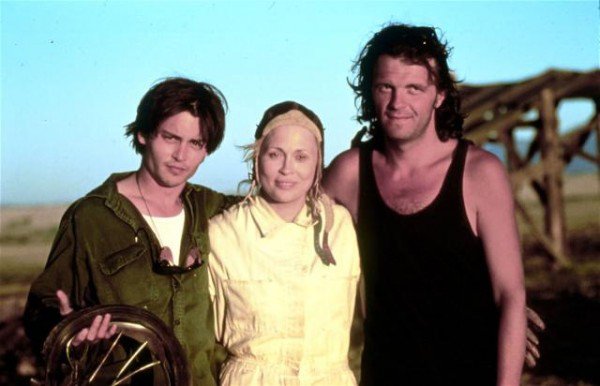
This success opens the doors of American cinema for him. After the film Time of the Gypsies, a theme that interests Kusturica strongly, he leaves to teach film at Columbia University, New York. He is be back behind the camera faster than expected when one of his students presents him with a script that he considers excellent. He gives up teaching to direct this screenplay which will become Arizona Dream. The film is carried by magnetic actors such as Johnny Depp, Jerry Lewis or Faye Dunaway and a striking soundtrack by Goran Bregovic. It tells the story of a young man whose life is going to change profoundly when he arrives in Arizona. He bonds with two women who bring him dreams, love and danger. The film is a success in 1993.
The war of Yugoslavia
Kusturica has difficulties to cope with the war of Yugoslavia which he observes on international television and during return trips to help his family, remained in Sarajevo.
Deeply wounded by the way in which the Western media covers the conflict, he decides to depict his vision in the movie Underground, by retracing the history since the Second World War until the ethnic conflict of the Nineties. It is an exuberant and satirical fresco. The film allows the director to win a second Palme d’Or. However, controversies tainted the promotion of the film. Kusturica is accused of having chosen the camp of the Serbian nationalists, which he denies.
Following this disappointment, he stops filming and devotes himself to music with his group.
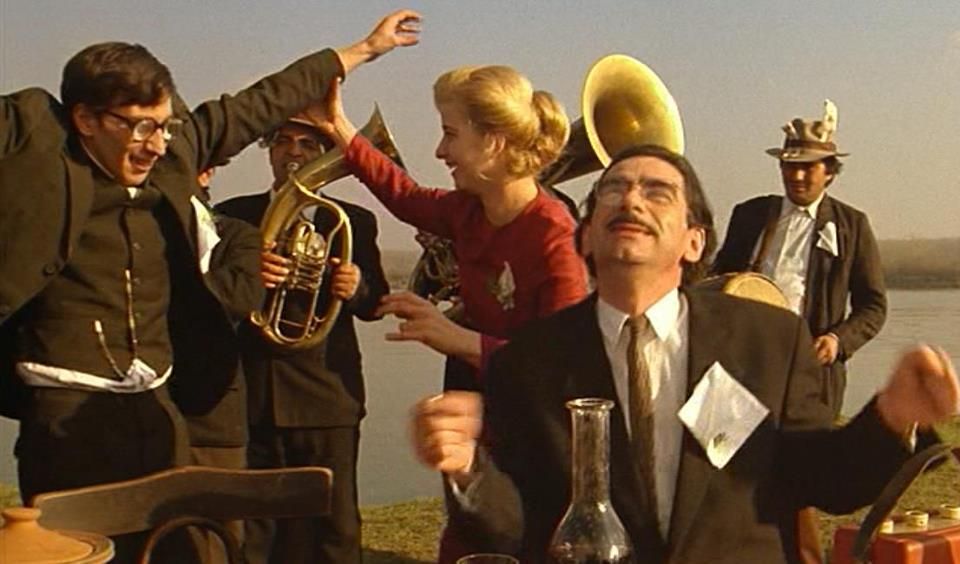
For our greatest pleasure, he finally comes back in 1998 with the comedy Black Cat, White Cat. Once again, he treats the theme of the gypsies in a spirit lighter than Underground, full of humor and with a highly colored palette. It talks about marriage, swindle and family rivalries with characters more insane the ones than the others.
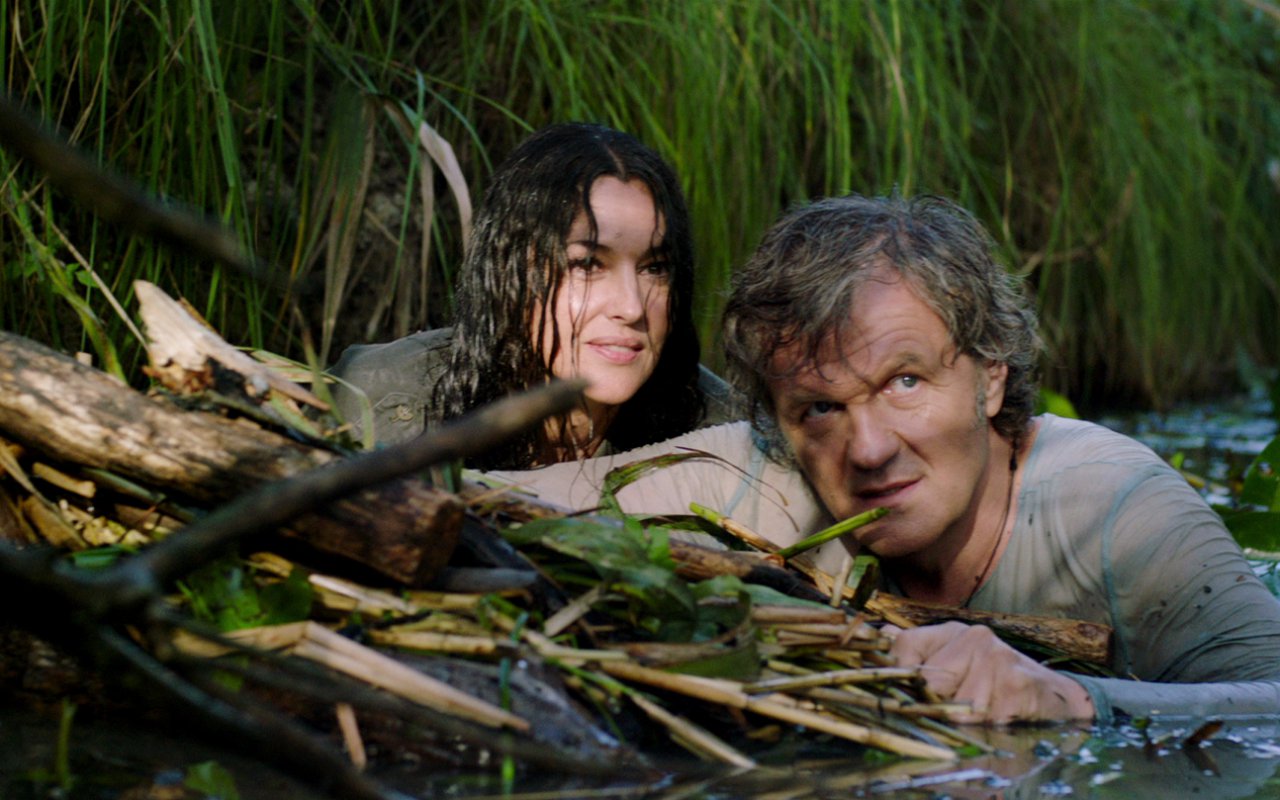
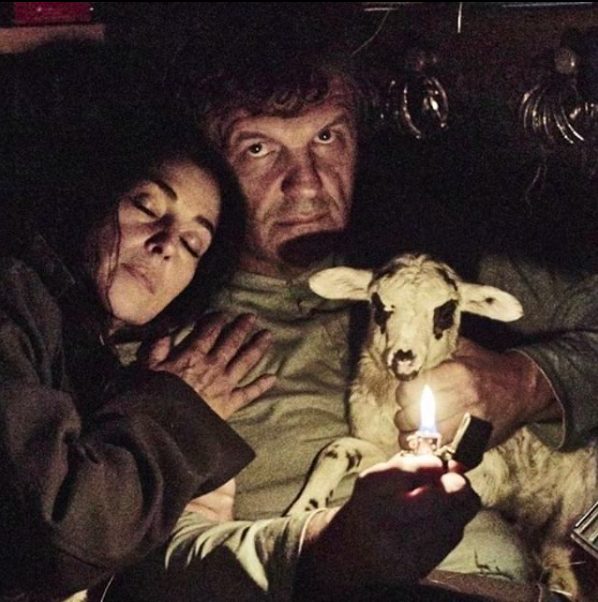
More recently, he offers us On the milky road where he plays alongside Monica Bellucci. The landscapes, the soundtrack, the semi-magical and harshly real universe at the same time create a poetry we never get tired of.
Kusturica, tourism, music and some surprises
In 2004, he had an entire village and a railway created for the shooting of the film Life is a miracle, in Serbia, close to the border with Bosnia-Herzegovina. It is a traditional wooden village that becomes a symbol of the anti-globalization and a new ecological tourist site. Named Küstendorf, seminars on cinema are organized there for young people and it is possible to sleep in traditional houses converted into hotels.
Kusturica has several hobbies and one of them is music. He is part of several groups and tours in the Balkans and France in particular. His group No Smoking Orchestra also provides the music for his films since 1998. Rather impressive, isn’t it?
We can add that Kusturica shot a film on Maradona, a video clip for Manu Chao (Rain’in Paradize) and many commercials, especially for cigarettes. Nowadays, this type of advertising is forbidden.

Our top-3 of Kusturica's movies
Here is our top 3 of Kusturica’s films:
1. On the Milky Road
Summary : We follow, or rather we are caught by the impossible love story on a background of war, bucolic scenery and poetry, between Kosta (Emir Kusturica) and Nevesta (Monica Bellucci). He delivers milk to the soldiers on the front line while grazing the bullets, while she is an Italian refugee so beautiful that the men fight to own her. The combination of romance and violence is skillfully measured in a frantic rhythm and in a burlesque atmosphere.
Anecdote : The film was shot in Bosnia-Herzegovina and took no less than 4 years to make.
2. Underground
Summary: In 1941, Serbian communists take refuge in a cellar to escape German enemies. Two friends, Blaky and Marko fall in love with a pragmatic actress who ends up seducing a German officer. The occupants of the cellar are cut off from the world and manipulated by Marko who is the only one to come and go from outside, becoming a close advisor to Tito. He is careful not to inform them of what is really happening in the outside world, when life has become more or less normal again.
Anecdote: the controversial film is accused of being pro-Serbian, despite winning the Palme d’Or at the Cannes Film Festival.
3. Black cat, white cat
Summary: The banks of the Danube are the theater of important traffic between Russians, Germans and gypsies.Marko and his son do not escape it and are forced to accept a not very advantageous marriage after a missed train hijacking. The history has as it were stopped in these communities described by Kusturica by mixing mysticism, studied bazaar, a lot of animals and colorful personalities.
Anecdote : after Underground, Kusturica returns with a visually chaotic and optimistic comedy. He thus makes forget somewhat the polemics.
Enjoy your session of Kusturica’s films !
Our trips suggestions in Croatia, Slovenia and Montenegro