This small Central European country is a great sports nation where cycling takes on a whole new importance.
2020 for the Slovenians seems to be the year of the bike! Remember the Slovenian victory in the Tour de France last summer. The result: bikes on display on balconies in the capital or elsewhere in the country, and a national euphoria that has been growing ever since. More and more Slovenians are expressing their love for the sport. Which for us French may seem a little excessive, and let’s admit it, we may also be a little jealous since, let’s remember, the last French victory dates back to 1985.
This movement hides, as is often the case, undertones, many people see in this practice symbols, or other meanings. We have tried to understand this tendency and its less obvious roots.
A highly popular sport in Slovenia
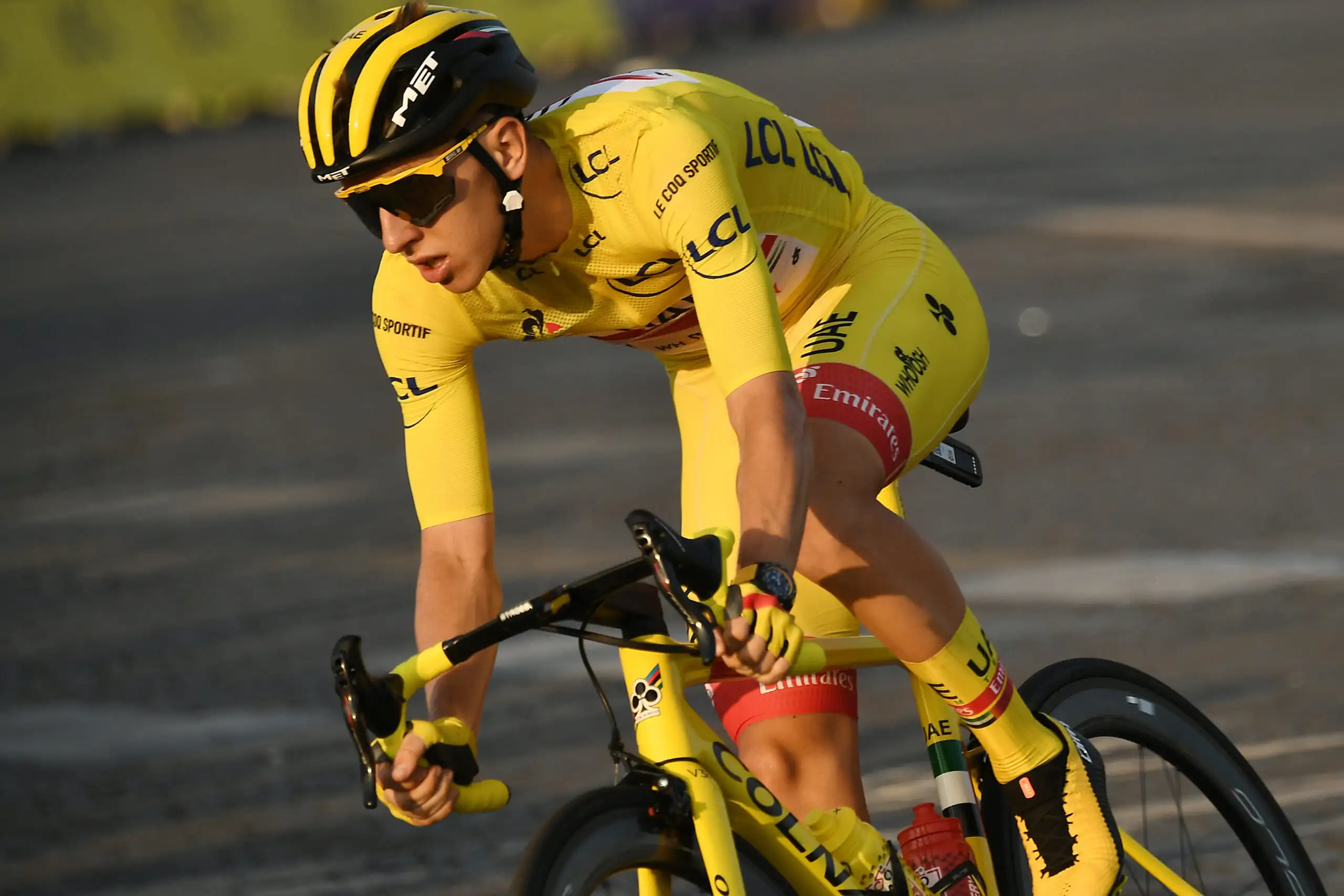
Since the victory of the Slovenian Tadej Pogacar in the Tour de France 2020, cycling has taken on important proportions in this small country. This adds a new dimension of national pride, success and international recognition in the sport for Slovenia. During the period of Yugoslavia, sportsmen and women from all member countries were united under one banner. Today, sport is a means to demonstrate its regained identity and to exist internationally. It should be remembered that Slovenia was the first country of the Yugoslav bloc to gain independence.
In the region of origin of the UAE Emirates rider, in the Karst Region, the initiative to exhibit decorated bikes for Christmas is a tribute and a way to be positive. It is a certain Mrs. Avsec who is at the origin of the movement. In one way or another, it replaces the Christmas festivities which unfortunately did not take place in Slovenia because of confinement.
The symbolism of the bicycle
Why are bicycles an even more positive symbol for Slovenians? It’s the symbol of movement, of the wheel that turns towards better days, progress, the opposite of immobility, concrete action that makes it possible to make progress. In any case, we appreciate the choice of the bicycle and the metaphors that go with it: the bicycle only stands upright when moving forward, perhaps towards progress. In times of confinement, it is a welcome encouragement.
A green country
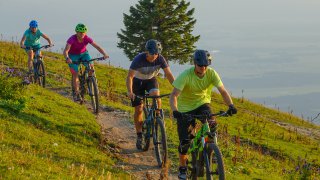
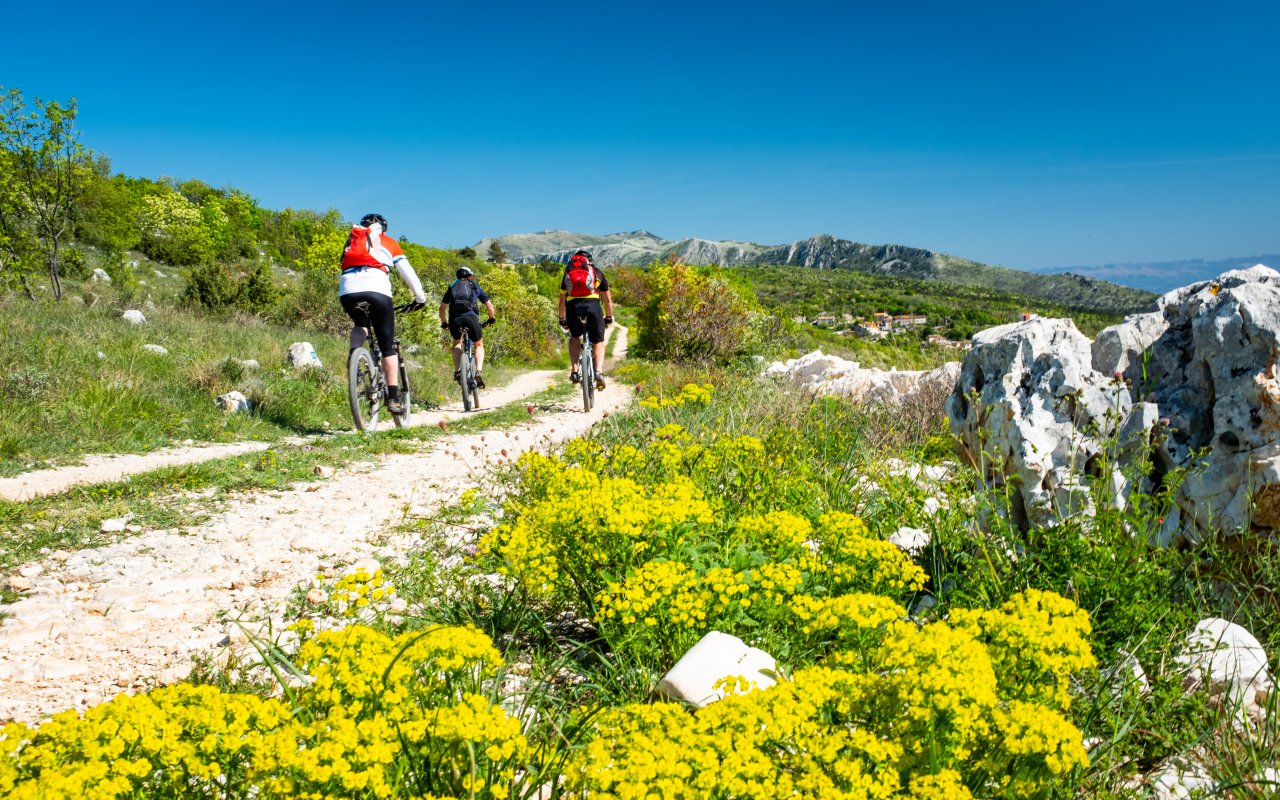
Putting the bike in the spotlight is also a way to promote the green approach of the country in general, but also in tourism. Slovenia has been engaged for many years in a green race for sustainable and responsible development. It is the first country to receive the title of world green destination. Gentle and clean modes of transport such as cycling are therefore encouraged and particularly enjoyable in the country’s many protected areas. They represent 13% of the national territory: that’s a lot for such a small country! Even city centers are equipped for cyclists. Tourism is also taking a greener turn for more authentic and environmentally friendly experiences.
A political movement?
The person behind the movement of decorated bicycles on display on balconies is “apolitical”. Why specify that there is no link between her approach and politics? Is the bicycle a political object in Slovenia?
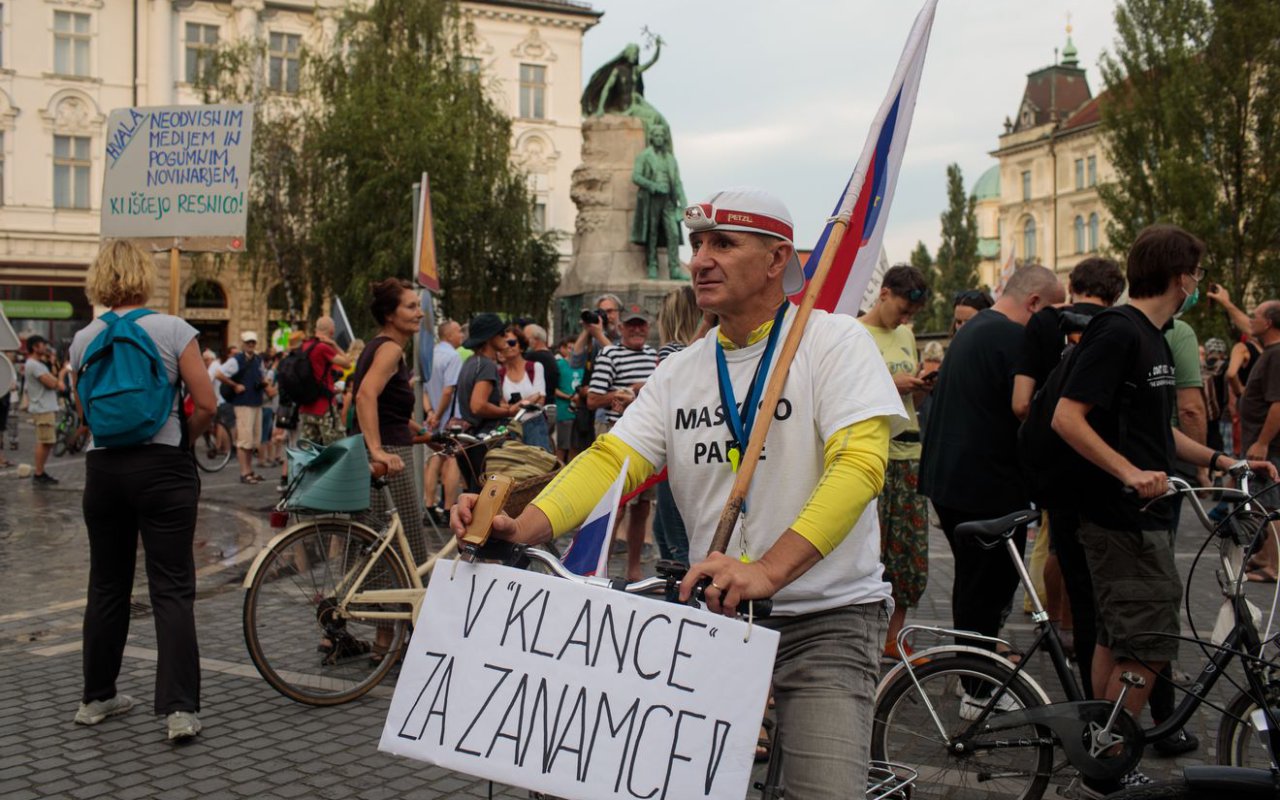
In reality, the bicycle reminds many Slovenians of a political protest that started at the first Lockdown. The bicycle has become a symbol of resistance in Slovenia. French did have Gilets Jaune, so why not bikes in Slovenia?
It all starts on May 8, 2020. A citizen collective calls for a bicycle demonstration in the streets of Ljubljana using social networks. The aim is to protest peacefully while contourning the ban on gatherings implemented to fight the Covid epidemic. They would have been between 5,000 (according to the police) and 10,000 (according to the left-wing weekly Mladina) demonstrators to go out in the streets of Ljubljana.
Why do Slovenes protest?
Voices are being raised protesting against the new government in place and in particular the new Prime Minister Janez Jansa. His party is accused of authoritarian excesses during the Covid crisis. Janez Jansa’s ruling party, the Slovenian Democratic Party, is categorized as “a centre-right nationalist formation, close to Hungarian Prime Minister Victor Orban,” according to an article in Courrier International-Paris.
The reasons invoked for the dissatisfaction of a part of the Slovenes are:
- “purges in the police and secret services”.
- “pressure on the media and journalists”
- “the lack of transparency in tenders for masks and other medical equipment”.
Already on May 1st, a first demonstration had gathered 3500 people. Since these two events, it has become a habit to meet by bicycle every Friday in Ljubljana. The route is marked out and Slovenians pedal from Preseren Square to the Parliament. It was the “Friday Protest”.
Only, a new confinement arrived and with it a total ban on demonstrations. The anti-government movement was thus stopped. It is the end of a means of expression and common action. But is it really over?
Whether the message is resistant, a tribute to the world of cycling, an encouragement in the face of the current crisis, an ecological will or a message for the future, the history of the Slovenians will be linked to bicycles for a long time to come.
Find our ideas, suggestions and tours to discover Slovenia.